Basketball Bet Builder: Creating Custom Wagers
 Available in US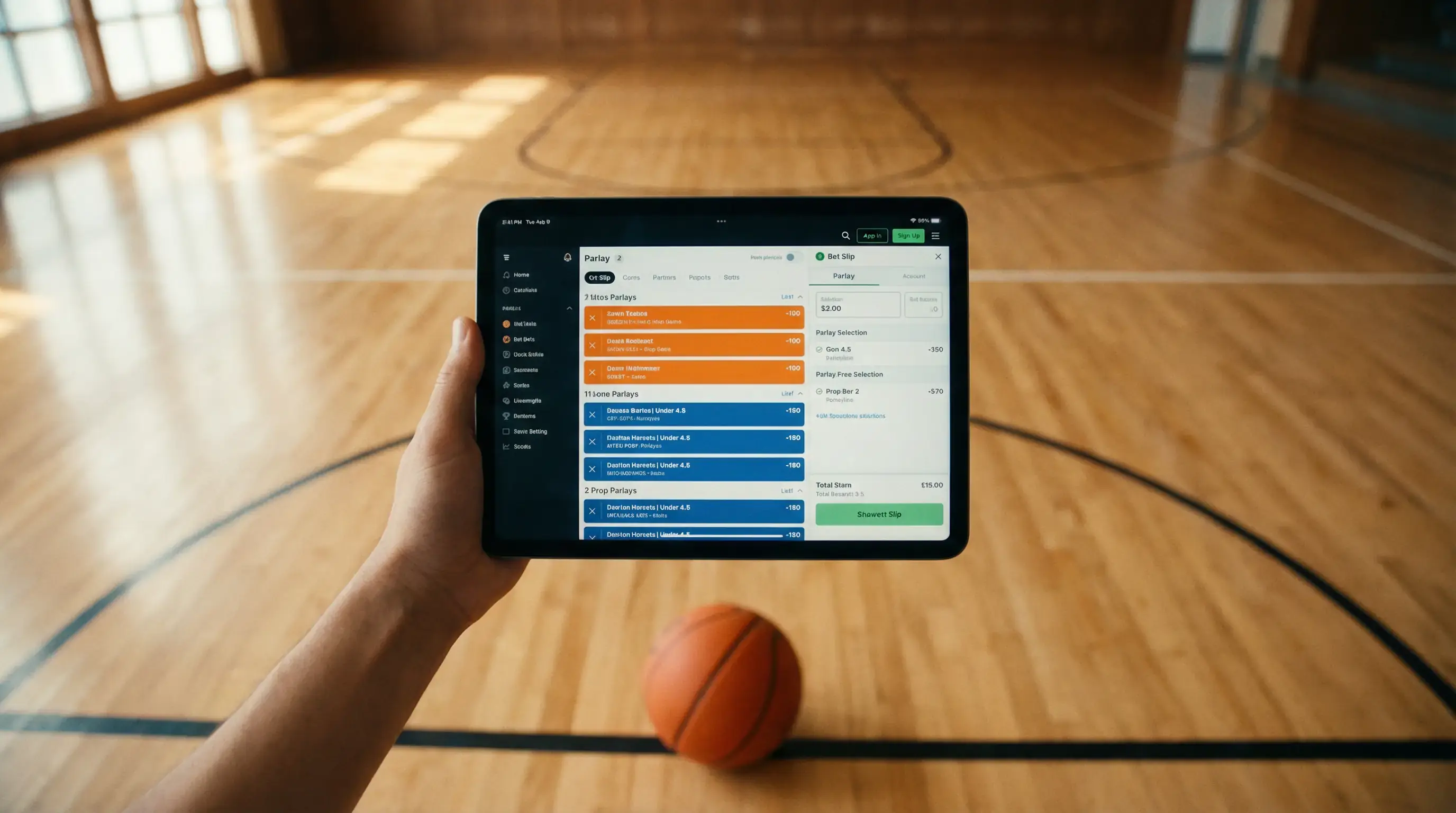
The first bet builder I constructed combined a Lakers spread cover with LeBron over on points and the game total going over. All three selections made logical sense together – if the Lakers covered comfortably, LeBron likely scored well in a high-paced game. Every leg hit. The correlated logic felt like discovering a hidden feature the bookmaker didn’t want me to find.
Bet builders let you combine multiple selections from a single game into one wager. Rather than betting spread, total, and player props separately, you package them together with multiplied odds. UK bookmakers have made bet builders increasingly prominent – they generate significant handle because punters love the customisation and potential returns. Monthly online betting in Britain exceeds 290 million wagers; bet builders capture a meaningful slice.
The appeal is obvious: express a specific game thesis in a single bet. If you believe the Celtics will dominate defensively, you can combine their spread cover with the game under and an opponent player going under on points. The builder translates your narrative into a betting slip.
How Bet Builders Work
Understanding the mechanics took me longer than I’d like to admit. The interface makes combination simple; understanding why certain combinations pay what they do requires deeper analysis.
Bet builders multiply individual selection odds to generate combined odds. If you select three outcomes at 1.80, 1.90, and 2.00, the combined odds are approximately 6.84 (1.80 × 1.90 × 2.00). Every leg must win for the bet to pay. One failure sinks the entire wager regardless of how the other selections perform.
Bookmakers adjust bet builder odds based on correlation between selections. If your picks naturally support each other – game over combined with player points overs – the bookmaker reduces odds from pure multiplication to account for the linkage. They know these outcomes aren’t independent; they price that dependency into your return.
Different platforms use different correlation models. Some apply crude adjustments that over- or under-correct for obvious correlations. Others employ sophisticated algorithms that capture subtle relationships. The same combination might pay 7.50 at one bookmaker and 6.00 at another purely based on how they model correlation.
Minimum and maximum leg counts vary by bookmaker. Most require at least two selections; many cap at ten or twelve. Maximum stake limits typically apply, sometimes lower than single-bet maximums – bookmakers protect themselves from large correlated positions.
Market Combinations
A friend once asked me which markets to combine in bet builders. My answer disappointed him: it depends entirely on your game thesis. There’s no universally optimal combination.
Spread plus total combinations express views about game flow. If you expect a blowout, favourite spread cover plus under makes sense – winning team pulls ahead early, game slows in garbage time. If you expect a shootout, underdog spread cover plus over aligns – high scoring keeps the game competitive regardless of which team technically wins.
Player props combined with team outcomes capture performance-context correlation. A point guard’s assists correlate with team offensive success; his over combined with team spread cover makes logical sense. A defensive player’s steals correlate with forcing turnovers; his over combined with opponent low scoring follows similar logic.
Quarter and half markets add granularity. If you believe a team starts slowly but dominates second halves, combining first-quarter underdog with full-game favourite creates a narrative-driven position. These timing-based combinations can capture patterns that full-game markets miss.
Avoid combining selections that contradict each other logically. Game over with multiple player unders creates internal tension – for the total to go over, someone must score. Favourite blowout with player props requiring close-game scenarios undermines your own position. Internal consistency matters.
Pricing Correlation
The edge in bet builders – if edge exists at all – comes from finding correlations the bookmaker’s model underweights. This isn’t easy; they’ve invested heavily in getting this right.
Obvious correlations receive heavy adjustment. Game over with multiple player points overs? The bookmaker knows these connect. LeBron points over with Lakers spread cover? Clearly linked. These combinations often pay less than independent probability would suggest because the correlation adjustment is significant.
Subtle correlations sometimes escape full adjustment. Player assists with different teammate’s scoring – if the point guard dishes, someone catches. Defensive player performance with opponent offensive struggles – connected but not always priced as linked. Team pace factors affecting player rebounding opportunities – correlation exists but may not be captured fully.
Testing correlation adjustments requires comparing bet builder odds to the product of individual selection odds. If your three-leg builder shows 5.50 but individual odds multiply to 7.20, the bookmaker has applied roughly 24% correlation adjustment. Whether that adjustment is accurate determines whether value exists.
Sharp bookmakers adjust more aggressively; recreational-focused books sometimes apply cruder corrections. Shopping bet builder prices across multiple platforms – time-consuming but potentially valuable – reveals which bookmakers under-adjust specific correlation types.
Builder Strategies
My approach to bet builders has simplified over years of experience. Fewer legs, clearer thesis, specific correlation logic – complexity doesn’t improve results.
Start with a clear game narrative. What do you expect to happen, and why? Build selections that express that narrative coherently. If your thesis is “Boston’s defence dominates Charlotte’s young guards,” your builder should include selections that profit from that specific outcome – opponent player unders, team spread cover, game under.
Two to three legs typically offer the best balance between return enhancement and probability collapse. Each additional leg reduces win probability exponentially while increasing correlation adjustment. Four-leg builders need significant edge on every selection to justify the mathematical penalty.
Avoid forcing legs to hit arbitrary return targets. Punters often add marginal selections to push combined odds from 4.00 to 5.50 or beyond. That additional leg reduces win probability more than it increases potential return. Let the selections drive the odds rather than chasing specific payout numbers.
Track bet builder results separately from single bets. Compare hit rate to expected probability based on combined odds. If you’re consistently losing faster than maths predicts, your combinations aren’t as sound as you believe. Honest tracking prevents confirmation bias from distorting your assessment.
Bet Builder Questions
Why are bet builder odds often lower than expected?
Bookmakers adjust bet builder odds to account for correlation between selections. When outcomes support each other – game over combined with player points overs, for example – the bookmaker reduces combined odds from pure multiplication. This correlation adjustment reflects that selections aren’t independent; one hitting increases the probability of others hitting.
What markets work best in basketball bet builders?
Markets that express a coherent game thesis work best. Spread plus total combinations capture game flow views. Player props combined with relevant team outcomes capture performance context. Quarter and half markets add timing specificity. Avoid contradictory combinations where selections undermine each other logically.
Building Better Builders
That first correlated builder felt like genius. Subsequent attempts taught humility – correlation cuts both ways. When your thesis is wrong, every leg fails together. The same logic that makes correlated builders attractive makes them punishing when you’ve misread the game.
Treat bet builders as precision instruments for expressing specific views, not lottery tickets for generating excitement. The customisation appeal can seduce you into building positions without genuine analytical foundation. Having an opinion isn’t the same as having an edge.
Use builders when you have a clear thesis that spans multiple market types. Use single bets when your edge exists in one specific area. Match the tool to the task rather than forcing every analysis into builder format because the interface makes it easy.
Published by the Basketball Sports Betting team.