FIBA World Cup Betting: Wagering on International Basketball
 Available in US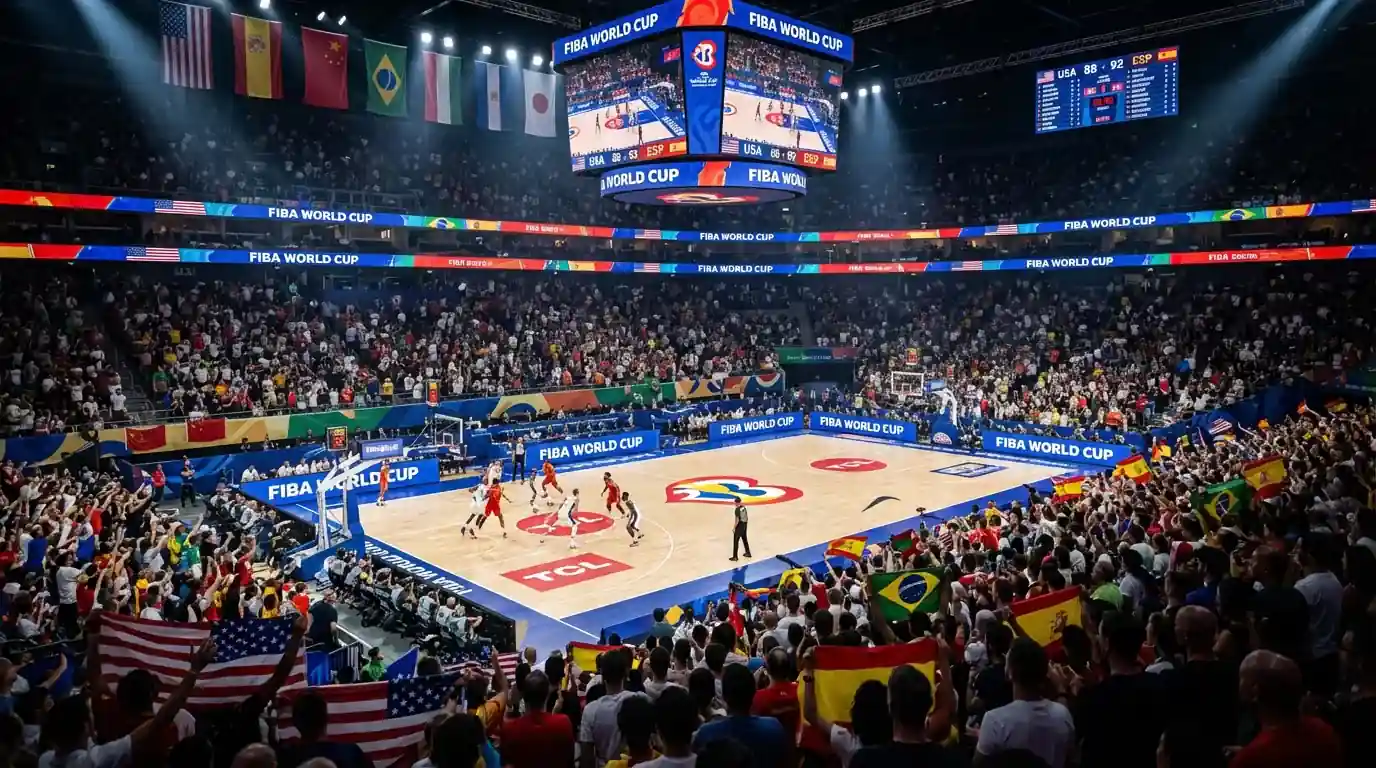
Germany defeating the United States in the 2023 semi-finals rewarded anyone who understood international basketball dynamics. The upset wasn’t inexplicable – it was predictable to those who knew how tournament basketball differs from NBA assumptions. That game exemplified why FIBA World Cup betting demands specific knowledge rather than extrapolated NBA understanding.
The FIBA Basketball World Cup brings together the world’s national teams every four years in the sport’s premier international tournament. For UK bettors, the competition offers several weeks of concentrated basketball betting during summer months when NBA action pauses. The markets are widely available at UK bookmakers, though understanding international basketball dynamics proves essential for success.
International basketball operates under different rules, with different team compositions, and different competitive dynamics than club basketball. FIBA World Cup betting rewards those who learn these distinctions rather than assuming NBA knowledge transfers directly.
Tournament Structure
Understanding how the World Cup unfolds helps identify betting opportunities at different tournament stages.
Thirty-two teams qualify through regional competitions and compete in the World Cup proper. The tournament begins with group stages – eight groups of four teams playing round-robin within their groups. Group placement matters because it affects knockout round seeding and potential opponent paths.
Classification rounds follow group stages, determining which teams advance to knockout rounds versus which are eliminated. The structure creates games with dramatically different stakes – some matchups are elimination games while others merely affect seeding.
Knockout rounds proceed through single-elimination brackets toward the championship game. The single-game format creates variance that multi-game playoff series would reduce. Underdogs have better chances in single games than in series.
Third-place games occur throughout the tournament as eliminated teams compete for placement. These games often feature motivation mismatches – some teams play hard for pride while others have mentally checked out. Reading motivation affects betting these contests.
The tournament spans roughly two weeks of concentrated action. Games occur daily across multiple time zones depending on host country. Recent tournaments in Philippines, Japan, and Indonesia created scheduling considerations for UK viewers and bettors.
International Basketball Differences
FIBA rules differ from NBA rules in ways that affect both gameplay and betting analysis.
Shorter game time – four ten-minute quarters versus NBA’s twelve-minute quarters – compresses action and typically produces lower-scoring games. Totals and spread magnitudes require adjustment from NBA expectations.
The three-point line is closer to the basket in FIBA play. This affects three-point attempt rates and success rates, changing how spacing and shooting translate to scoring patterns.
Different foul rules – five fouls to disqualification versus NBA’s six, and different team foul thresholds for bonus free throws – create different foul management strategies and late-game dynamics.
No defensive three-second rule allows zone defences that NBA rules discourage. Teams can pack the paint more effectively, changing how perimeter players and interior scorers interact.
Physicality standards differ between FIBA and NBA officiating. International referees typically allow more contact; American players accustomed to NBA whistle-happiness sometimes struggle with adjustment.
Game pace generally runs slower in international basketball. Fast-break opportunities occur less frequently; half-court execution matters more. Teams that rely on transition scoring in domestic leagues might find international games more grinding.
Team Assessment
Evaluating national teams requires different analysis than club team assessment.
Roster availability varies tournament to tournament. NBA players might or might not participate depending on contract situations, injury recovery, and personal priorities. A national team’s quality fluctuates based on who actually commits to playing.
Team continuity matters enormously in international basketball. National teams that maintain consistent rosters across tournaments develop chemistry that star-studded but unfamiliar groupings can’t match. Germany’s 2023 success came partly from years of playing together.
Coaching systems translate differently from club to international settings. National team coaches have limited preparation time compared to club coaches; systems must be simple enough to execute without extensive practice. Coaching quality in international settings involves different skills than club coaching.
Home continent advantage provides some predictive value. Teams playing World Cups in their regions – European teams at European-hosted tournaments, Asian teams at Asian venues – often receive crowd support and minimised travel impact.
Historical international performance indicates team culture and infrastructure. Countries with established basketball programmes – Spain, Argentina, Australia, Serbia – consistently perform regardless of specific roster compositions. This institutional edge matters alongside individual talent.
Betting Approaches
My FIBA World Cup betting evolved through multiple tournaments before finding effective approaches.
Outright winner markets open far before tournaments begin. These futures often offer value when rosters are uncertain – if you correctly anticipate roster strength before markets adjust, long-odds positions can offer significant value.
Group stage betting often provides clearer edges than knockout rounds. Round-robin formats reduce single-game variance; team quality differences emerge more reliably over three games than in single-elimination matches.
Live betting during FIBA games requires recalibrating from NBA instincts. The shorter games, different pace, and different scoring patterns mean NBA-based live betting heuristics often mislead. Watch FIBA games specifically before betting live on them.
Underdogs perform better in knockout rounds than group stages on average. Single-game formats favour lesser teams who might win one game but would lose a series. Underdog spreads in knockout games deserve serious consideration.
Motivation analysis matters significantly in classification games. Teams playing for Olympic qualification spots or regional pride often outperform expectations; teams with nothing meaningful at stake frequently underperform.
FIBA World Cup Questions
How do FIBA rules affect betting?
FIBA’s shorter quarters, closer three-point line, different foul rules, and zone defence allowance create different game dynamics than NBA basketball. Totals typically run lower, pace is generally slower, and interior scoring faces different challenges. Bettors should adjust expectations from NBA norms when setting targets for FIBA games.
Which teams are strongest at FIBA World Cup?
The United States remains the most talented but doesn’t always win – roster commitment varies and the team sometimes lacks chemistry. Spain, France, Serbia, Australia, and Germany have established programmes that perform consistently. Emerging powers like Canada show increasing strength. Historical international performance often predicts better than raw talent assessment.
Making the Most of International Basketball
That Germany-USA semi-final wasn’t a miracle – it was international basketball operating as it often does. The team that had played together for years, in a system designed for FIBA rules, defeated a more talented but less cohesive opponent. Understanding these dynamics is the foundation of profitable FIBA betting.
Prepare for World Cups specifically rather than treating them as NBA extensions. Research roster commitments, review team continuity from previous tournaments, and understand how specific nations approach international competition.
Watch FIBA basketball before betting on it. The game looks different from NBA basketball in ways that statistics alone don’t capture. Visual familiarity with international basketball improves your ability to assess teams and predict outcomes.
Treat the World Cup as a distinct betting opportunity – several weeks of concentrated action requiring specialised knowledge. The bettors who invest in understanding international basketball specifically, rather than assuming NBA expertise transfers, find the most value.
Consider the World Cup’s timing advantage for UK bettors. Summer scheduling means games often occur during convenient UK viewing hours rather than the late nights NBA requires. This accessibility makes live viewing and live betting more practical than during the NBA season.
Build your international basketball knowledge progressively. Following EuroLeague and national team qualifying provides year-round exposure to international basketball dynamics. This ongoing learning compounds – by the time each World Cup arrives, you understand the competitive landscape better than bettors who only pay attention during the tournament itself.
Created by the ”Basketball Sports Betting” editorial team.